 AE Sports News
Cricket Australia accused of prolonging ball-tampering saga through vague response
Guardian Cricket columnist Jonathan Horn argues that Cricket Australia's reluctance to properly address the 2018 Cape Town scandal, despite fresh comments from chief executive Todd Greenberg, is keeping the affair alive rather than closing it down.
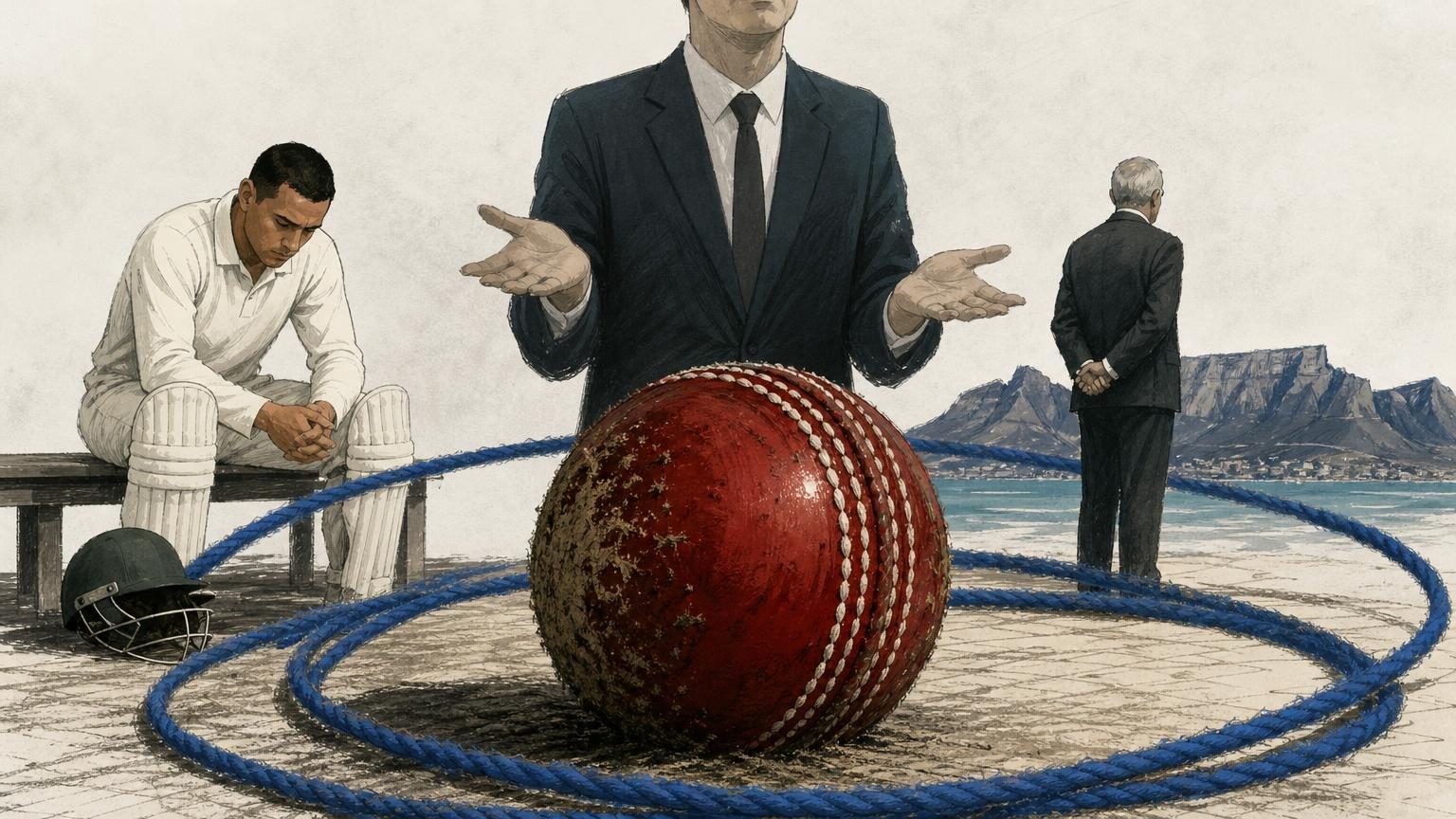
Cricket Australia chief executive Todd Greenberg wants the 2018 ball-tampering affair consigned to history, but his own equivocal response is having the opposite effect, according to Guardian Cricket columnist Jonathan Horn.
Speaking on SEN this week, Greenberg argued that the governing body has moved on, noting it was a different administration, a different team and a different era from the one implicated in Cape Town. He added that "there were a lot of learnings that came out of it."
The episode caused a national uproar in 2018. Then prime minister Malcolm Turnbull, flanked by Angus Taylor and a firefighter, branded it a "terrible disgrace" and said the sport needed to be "once again played by champions that everybody can look up to."
Cricket Australia subsequently commissioned a 116-page review from the Ethics Centre, built around what was called the "Everest Process", which scored the organisation's values on a scale running from "mostly not lived" to "always lived."
Horn argues the furore was never really about whether the team had cheated, but about what sort of side Australian cricket had become — widely perceived at the time as joyless, overworked and poorly served by an administration more focused on marketing than culture.
The appointment of Pat Cummins as captain in the aftermath changed that image considerably. Writing in The Australian, Peter Lalor summed up the post-scandal era as one of "no sledging, no arguing, no anger, no love gone wrong, no dust ups, no bust ups."
Yet the Cape Town affair never fully disappeared. On the eve of this year's tour of South Africa, Mitchell Starc asked, "What's left to come out after eight years?" The answer, Horn writes, turned out to be a good deal more.
Usman Khawaja and David Warner have both since produced books, while Warner has also posted his reflections from Nepal during a stint with the Kathmandu Gorkhas. Khawaja has faced criticism for the timing and motive of his account, with one columnist accusing him of "his talent for inserting race, religion and victimhood into his story."
Horn contends the Cape Town chapter of Khawaja's book is less incendiary than much of the commentary suggests, but says it reopens a question that was never properly settled: the shambolic original press conference and an investigation that, in his view, was wholly unsatisfactory.
He draws a parallel with former Cricket Australia chief executive James Sutherland, who once described the sport's governance as operating within "an issues-rich environment" — language Horn characterises as evasive corporate phrasing rather than genuine accountability.
His conclusion is that Khawaja's book offered Cricket Australia, and those who inherited the fallout, a genuine opportunity to explain the difference between detailed knowledge of what happened in Cape Town and the collective responsibility that followed — without the career and reputational stakes that made full disclosure impossible in 2018.