 AE Sports News
ECB central contracts explained: how cricket's top deals work
The England and Wales Cricket Board has handed out 39 men's central contracts for 2026-27, with Ollie Robinson among those rewarded and Zak Crawley among those who missed out.
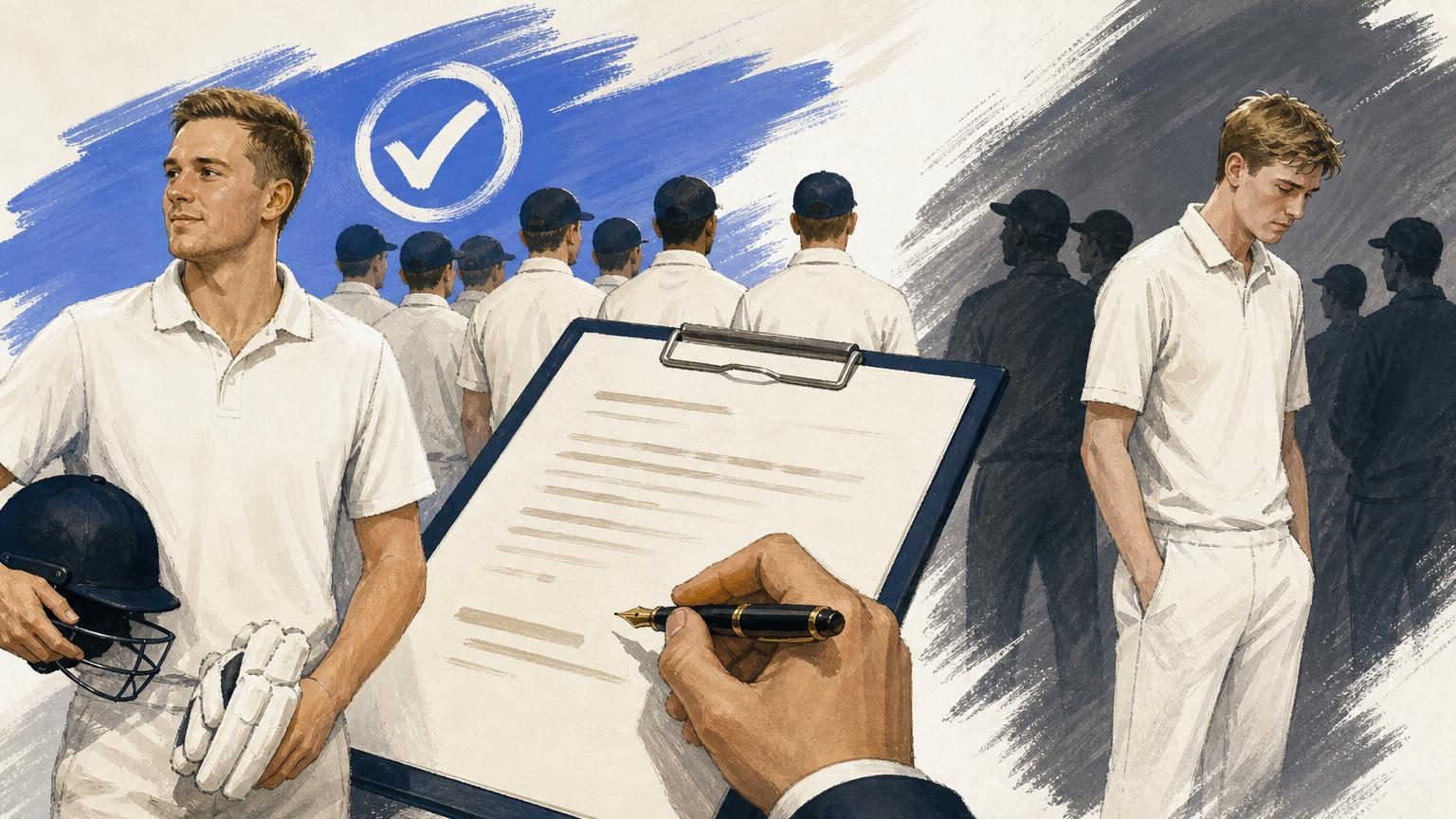
The England and Wales Cricket Board issued 39 central contracts to men's players last week for the 2026-27 season, comprising 30 full contracts and nine development deals, according to BBC Sport.
Ollie Robinson was among those awarded a full contract after a strong summer with England's Test side, while Kent batter Zak Crawley dropped off the list entirely.
Central contracts have existed since 2000, created to give the governing body greater influence over its leading players rather than leaving their management solely to individual counties.
Once a player holds a central contract, the ECB effectively takes over as their main employer, ahead of the county they continue to represent, and is expected to cover most or all of that player's salary, though arrangements are assessed individually.
The system is deliberately forward-looking. Contracts are handed out annually not just to reward current form but to identify players the ECB believes will be central to the side in the near future.
Both men and women receive multiformat deals. For the women's game, the salary jump for a centrally contracted player compared with what they would otherwise earn through their county is understood to be proportionally larger than the equivalent uplift for men.
Women's contracts for the current 2025-26 term were confirmed at the end of November, with 17 players handed full deals and a further four given 'skills' contracts, the women's equivalent of the men's development tier.
Holding a central contract also gives the ECB authority over off-field elements such as workload management, injury rehabilitation, strength and conditioning, and access to coaching resources, all of which can then be overseen internally rather than by the counties.
Development contracts carry their own pay structure. A player on one effectively receives a 25% increase on their county salary, with the county covering half of the total and the ECB funding the remaining half plus an additional 25% on top.
England men's chief selector Marcus North has said he wants players on the fringes of the senior side, particularly those involved with the Lions set-up, to commit more time to representing England rather than prioritising franchise tournaments.
Crawley's case illustrates the knock-on effect when a player loses a central contract and reverts to being paid entirely by their county. Discussions over his revised salary, and how it would sit within Kent's salary cap, would have taken place before the ECB's announcement was made public.
Kent confirmed Crawley had agreed fresh terms with the county three days after the ECB published its latest round of central contracts, BBC Sport reported.