 AE Sports News
FIA proposes simplified V8 turbo hybrid engines for F1's next rules era
A new FIA document sent to Formula 1's six engine manufacturers outlines cheaper, lighter V8 turbo hybrid power units for introduction in 2030 or 2031, BBC Sport reports.
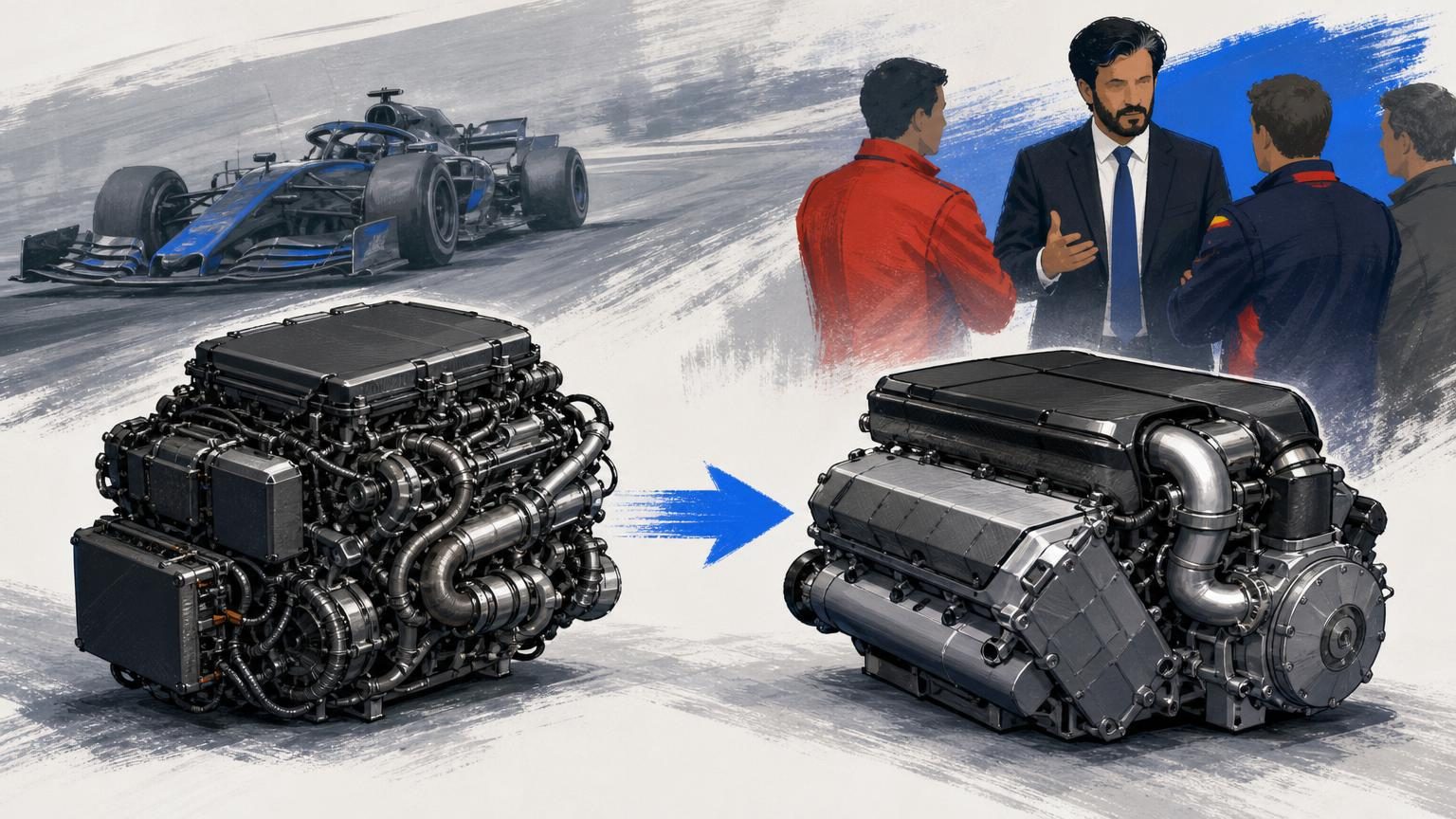
Formula 1's governing body has set out plans for a new generation of engines built around V8 turbo hybrids rather than the current V6 units, according to BBC Sport, which has seen details of a proposal document circulated to all six manufacturers in the sport.
The framework, intended to guide discussions on rules to be introduced in either 2030 or 2031, favours engines that are cheaper, lighter and simpler than today's power units while aiming to produce a more visceral sound, BBC Sport reports.
Notably, the FIA has stepped back from an earlier idea of reverting to naturally aspirated engines, instead retaining a turbocharger within the new design.
Current F1 cars run 1.6-litre V6 turbos split 53-47 between combustion and electrical power, a ratio due to shift to 60-40 by 2028. The new proposal envisages a V8 of between two and 2.3 litres, paired with a smaller turbo running at reduced boost and a scaled-back hybrid system.
The electric motor's recovery capacity would fall to 200kW from the current 350kW. Of that, 100kW — equivalent to 134bhp — would be available at all times, with a further 100kW reserved for an overtake or push-to-pass mode. The remainder of a total output in the region of 900bhp would come from the internal combustion engine.
Fully sustainable fuels would remain part of the package, though the FIA wants to simplify the requirements around them to bring costs down. The broader goal is to strip 80kg from overall car weight.
The shift marks a change of direction for FIA president Mohammed Ben Sulayem, who had initially pushed for a return to V10 engines before more recently favouring V8s.
This year's power units have drawn criticism from senior drivers over the way hybrid energy management has affected racing. Fernando Alonso has described F1 as the "battery world championship" and called fast corners "the charging station for the car", while Max Verstappen labelled the current rules "Formula E on steroids" and anti-racing, according to BBC Sport. Both have since softened their stance after governing bodies made in-season adjustments and began work on the new framework.
BBC Sport reports that the fundamental architecture of the proposal is broadly acceptable to the manufacturers, though the finer details still require negotiation. Two routes are outlined: a minimal-adaptation option, in which a 2.1-litre V8 could be created by adding two cylinders to the existing 1.6-litre block alongside a smaller turbo and hybrid motor, or a more contentious option involving an external supplier providing a standardised baseline power unit for manufacturers to customise.
Sources close to the manufacturers say there is alignment against standardisation, with all six wanting to continue designing and building their own power units as a performance differentiator. Mercedes, Ferrari, Audi, Honda and Red Bull currently supply engines in F1, while new entrant Cadillac is planning its own unit for the revised rules.
Two further arguments against standardisation have emerged, according to BBC Sport: the safeguard it would offer against manufacturers quitting the sport is seen as unnecessary since all six would already be committed to the new rules, and this season's standardised electronic control units have caused issues, including a software bug that restricted cars to near walking pace at the start of the Bahrain Grand Prix held in Malaysia.
The document also proposes cutting the engine budget cap by half from its current level of $190m (£143m) per year, though this figure is understood to be a starting point rather than a final number. Discussions continue over how to manage a gradual reduction that limits the impact on manufacturers' workforces.