 AE Sports News
Hamilton's legacy and F1 future assessed after 400th grand prix
BBC F1 correspondent Andrew Benson examines Lewis Hamilton's record and how much longer he can compete at the top, after the seven-time champion's 400th race coincided with a dramatic Sao Paulo Grand Prix.
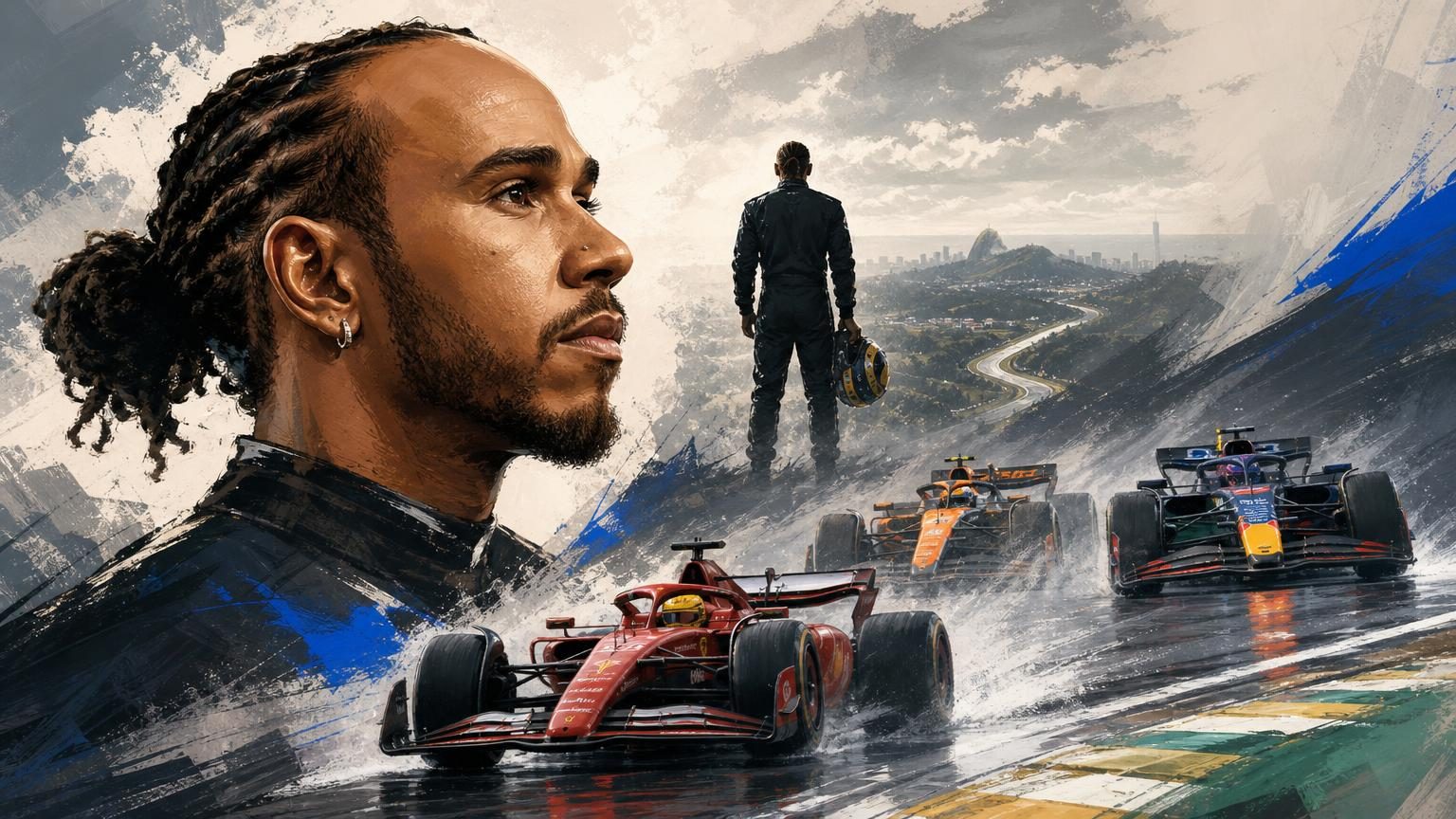
Lewis Hamilton has now started 400 grands prix, more than 100 of them from pole position, prompting fresh debate over his standing among Formula 1's greats and how many more years he can remain competitive.
The milestone came the same weekend Lando Norris converted pole into victory at a wet-dry-wet Sao Paulo Grand Prix, with Max Verstappen recovering from an engine-penalty-enforced last-place start to finish second and Red Bull's Isack Hadjar completing the podium in third.
At Interlagos, Mercedes wrapped up the constructors' title for the first time in five years, with George Russell fourth and new world champion Kimi Antonelli fifth.
Asked to assess Hamilton's greatness, BBC F1 correspondent Andrew Benson described him as statistically the most successful driver in history, holding the records for most wins and most pole positions, and tied with Michael Schumacher on seven world titles.
Benson noted many would argue Hamilton should have an eighth championship, given the controversial handling of the final race of the 2021 season.
He pointed to Hamilton's victories at Silverstone in 2008 and in Brazil in 2021 as examples of a driver performing at the very highest level, and observed that Hamilton has won races in every season bar 2022, 2023 and 2025.
Benson acknowledged Hamilton struggled relatively during the 2022-25 era of ground-effect cars; across three seasons as team-mates, Russell got the better of him twice, and Benson said Hamilton looked a shadow of his usual self once he moved alongside Leclerc in 2025.
Those performances raised questions over whether a driver once famed for adaptability was finding it harder to adjust because of his age, now 41.
Benson said Hamilton has been sensitive to that scrutiny, raising it himself on several occasions this year, including after his 400th race in Brazil.
"I never ever thought that I would be reaching numbers like that," Hamilton said. "It's crazy because I still feel young, and regardless of the things that people say, you saw my pole last week, I still have the pace, I still have the speed and I still have the dedication, which is most important and the focus. For me, that number is kind of irrelevant."
Benson said this year's regulations have put Hamilton back in more familiar territory, with the Ferrari driver now performing strongly and running neck-and-neck with Leclerc.
On longevity, Benson said there is no obvious age-related reason Hamilton cannot continue for several more years, citing Fernando Alonso, who is 45 and still performing at a high level, as shown again in Brazil.
Hamilton has said he wants to keep racing at least until Formula 1 returns to Africa, which Benson noted will not happen before 2030 at the earliest, by which point Hamilton would also be 45.
Benson added that reaching that point would require Hamilton to sign at least one further contract, with his current Ferrari deal believed to run until the end of next year.