 AE Sports News
James McClean details Troubles upbringing and poppy row fallout in new memoir
The former Republic of Ireland international, now in dispute with Derry City, has spoken to Guardian Football about his Creggan childhood and the 2012 poppy controversy that shadowed his Sunderland career.
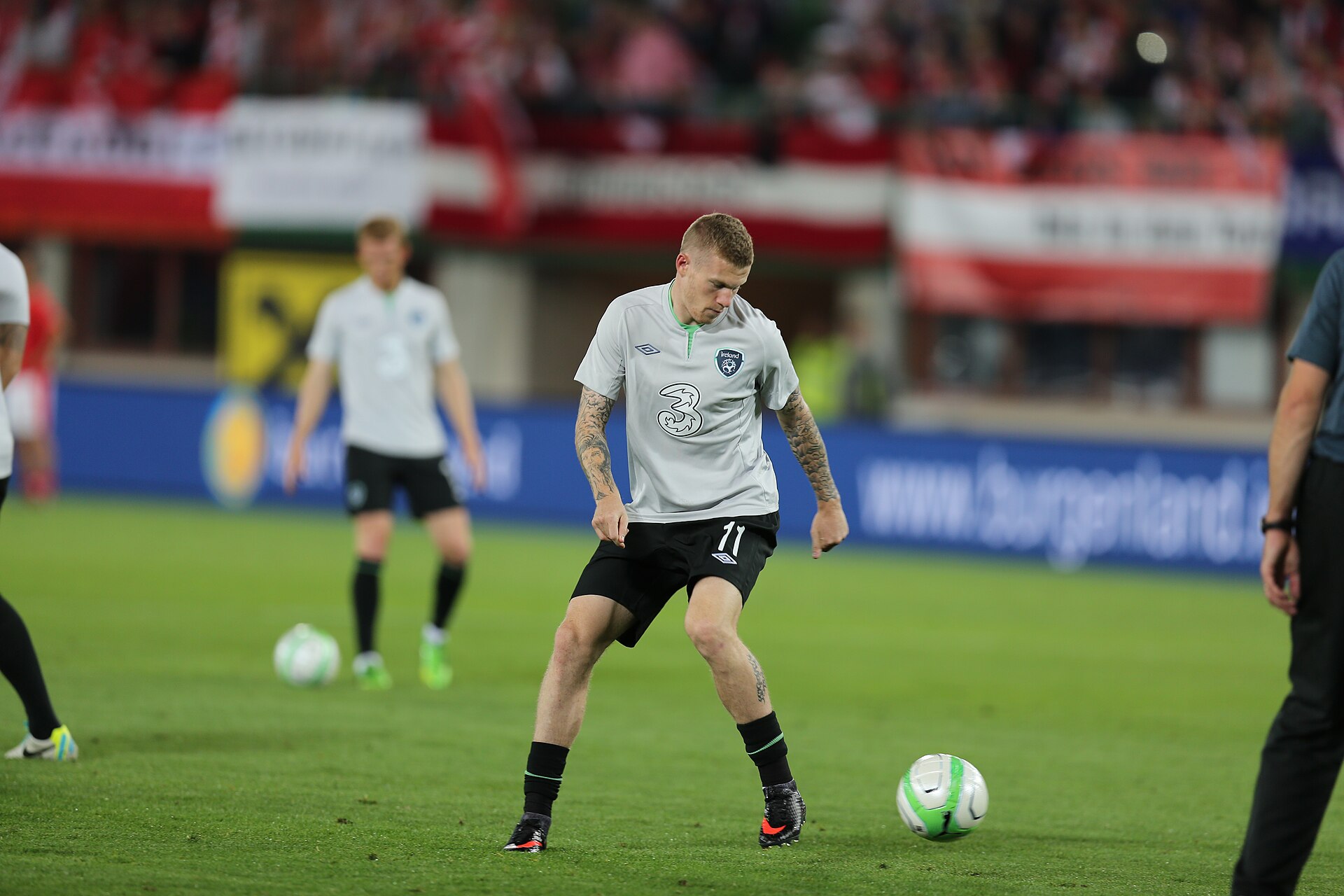
James McClean has given a wide-ranging interview to Guardian Football in which the former Republic of Ireland international reflects on his upbringing in Derry's Creggan estate and the controversy over his refusal to wear a poppy that defined much of his time in English football.
McClean, 37, told the paper's Donald McRae that he is widely misunderstood. "The perception of me is that, basically, I am a madman," he said. "I'm outspoken. I'm a loudmouth. I'm very opinionated and I hate all things British. That's from people who don't know me."
The interview comes as McClean is currently at odds with his club, Derry City, despite a career he regards as highly successful. He won 103 caps for the Republic of Ireland, making him the fifth-most-capped player in the country's history, and said he is the only footballer from the north of Ireland to pass a century of caps. He also totalled 150 Premier League appearances across five seasons and 800 professional games in total.
McClean's autobiography, The Walls, forms the backdrop to the conversation. In it, he describes a childhood in Creggan, the Derry estate hit hardest by Bloody Sunday in 1972, when British soldiers killed 14 unarmed civilians, six of them from Creggan itself. The Saville inquiry later found the victims posed no threat, prompting David Cameron to apologise in 2010 for what he called an "unjustified and unjustifiable" killing.
Born in Derry in 1989, McClean writes that he learned to make a petrol bomb as a child, mastering it by the age of 11. Asked how he would feel if his own children had to do the same, he told Guardian Football: "I'm very thankful they don't have to. It's a different era now. I just want them to be proud to be Irish."
He described growing up surrounded by the aftermath of the Troubles, recalling gunmen on the streets, shootings, kneecappings and masked men carrying out punishment beatings near his home. "You weren't scared. You knew you'd done nothing wrong. That was the norm... but it's not normal," he said.
His move to English football began in August 2011, when Steve Bruce brought him to Sunderland. By the time he made his Premier League debut that December, Bruce had already been replaced by Martin O'Neill, and McClean quickly established himself as a first-team regular, later winning the club's player of the year award.
Everything shifted in November 2012, when McClean told Sunderland he would not wear a poppy for matches around Remembrance Sunday, citing the British army's long occupation of Derry. "There was never a decision for me to make," he said. "Wearing the poppy was just never going to happen."
He was critical of how Sunderland handled the fallout, saying the club issued a statement distancing itself from his stance while declaring its own support for the poppy appeal, which he felt focused unwanted attention on him rather than protecting him.
McClean recounted the threat made against him before an away fixture at Fulham, broadcast live on Sky, saying police were posted outside his home the night before the match after the Metropolitan Police treated the threat as serious. He was booed by both sets of supporters after being brought on by O'Neill.
He said the episode has left a lasting mark. "It's completely changed me as a person," McClean told Guardian Football. "It's made me a bit of a recluse because I don't trust a lot of people now. I've been stung bad."
Photo credits
File photo (2013). Photo: Michael Kranewitter · CC BY-SA 3.0 at · via Wikimedia Commons · shown in full here; cropped in thumbnails
