 AE Sports News
Inside World Rugby's referee school: scrum science and a Gatland cameo
The Guardian's Robert Kitson reports from a Windsor hotel where the world's top officials were drilled on scrum law and new tackle sanctions ahead of the Nations Championship.
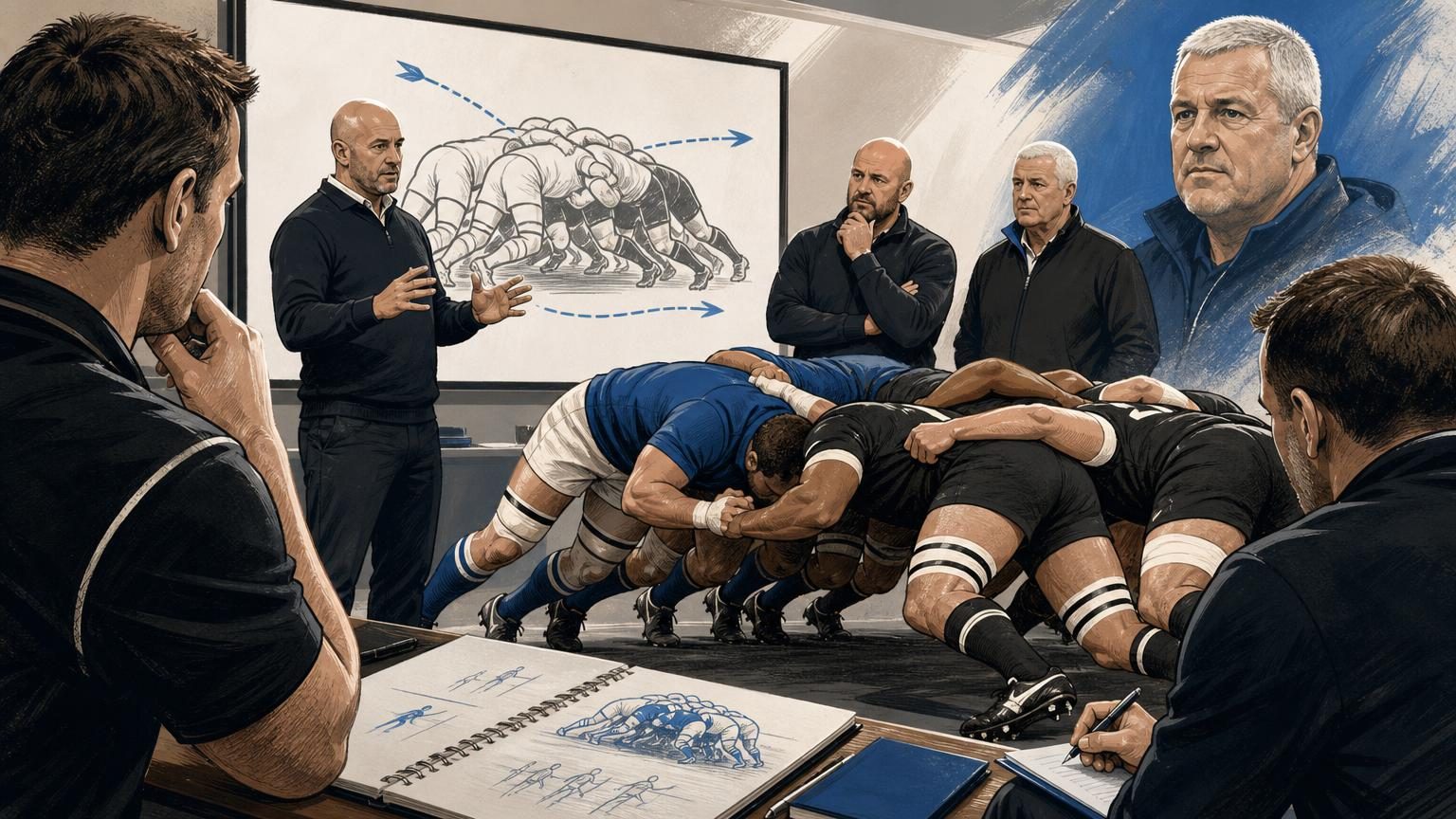
Rugby's leading referees gathered at a hotel near Windsor this week for a session that resembled an airline pilots' briefing more than a sporting get-together, according to the Guardian's Robert Kitson, who attended training that included appearances from Karl Dickson, Luke Pearce, Angus Gardner, Ben O'Keefe and Hollie Davidson.
The officials, who will take charge of fixtures in this month's Nations Championship, worked through sessions on scrum mechanics led by Jonathan Humphreys, the former Wales captain now serving as World Rugby's scrum consultant.
Humphreys used video clips to show referees the importance of loosehead props keeping their inside shoulder untucked before engagement, a detail that can skew the angle of an entire front row, including the opposition's.
Warren Gatland, the former British & Irish Lions head coach now working as a World Rugby coaching consultant, made an unscheduled appearance, binding on to Humphreys to demonstrate the shoulders-back position officials are expected to enforce.
Referees were also briefed on the hooker's so-called brake foot, where a free-kick should follow if the heel of the front foot is not flat to the ground, and on the requirement that front-rowers align temple to temple rather than head to shoulder before engaging.
World Rugby's guidance to officials is built around a four-pillar approach: protect the player, embrace the contest, promote continuity and win the fan, Kitson reports, with the aim of giving referees greater backing to make decisive calls rather than seeing matches disrupted by repeated television match official reviews.
One leading official told the session that officiating should focus on what is "clear and obvious", summarising the approach as: "Get what matters. The rest doesn't matter."
Teams have been warned to expect more free-kicks and penalties in the early rounds of the Nations Championship as players and officials adjust to new sanctions for hip and knee drop tackles, alongside an updated process for dealing with head contact at the breakdown designed to cut down on dangerous clear-outs.
Kitson notes that player habits are expected to shift only once there is no alternative but to comply with the stricter interpretations.
World Rugby's leading head coaches met the sport's top referees on Sunday to discuss concerns and hopes for the game's direction, a conversation Kitson suggests could lead to tangible changes.
Ideas raised in that exchange included specialist goggles that would give referees an aerial view of scrums to aid difficult decisions, and the possibility of a dedicated scrum-focused official brought on for set-pieces.
World Rugby is also commissioning further research into which elements of the game fans most enjoy, using heart rate monitors on spectators. Early studies in the southern hemisphere found heart rates rise sharply during interceptions, line breaks and the haka, while scrum resets and stoppages in play were identified as the biggest turn-offs.
Kitson also reports that the ratio of tries to penalty goals scored in major Test matches has trebled, a trend World Rugby will be monitoring as it assesses whether its latest law tweaks are striking the balance it wants between attack and defence.